
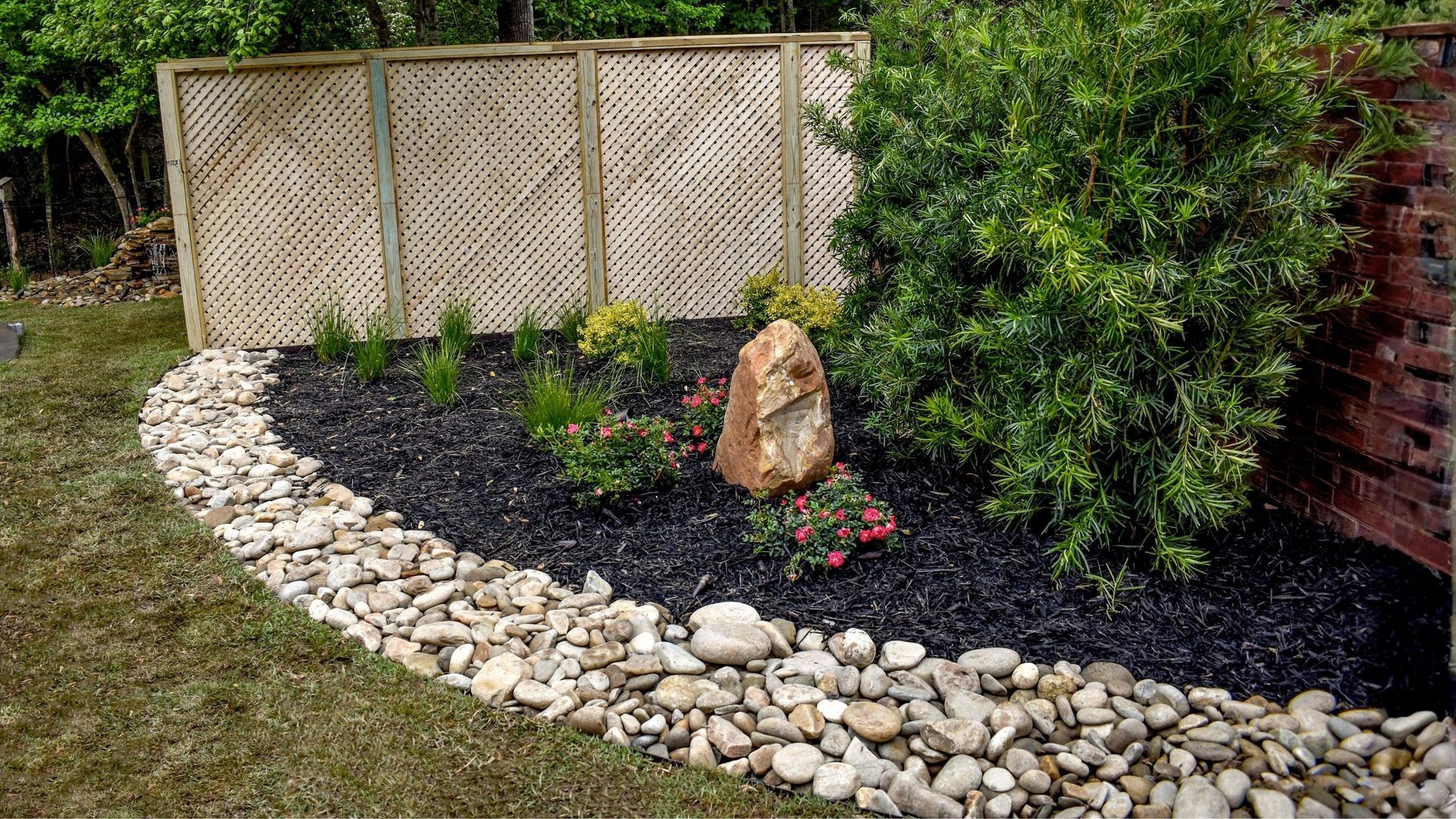
Finishing Layers That Define Landscape Beds
Planting, Mulch & Decorative Rock Installation in Battleboro for properties requiring moisture control, weed suppression, and polished landscape bed appearance
Installing shrubs, ornamental plants, mulch, and decorative stone creates the finished appearance that ties together hardscape features and lawn areas throughout your property. When new construction leaves bare soil around patios and walkways, when existing beds show thinning mulch and exposed ground, or when plantings lack definition and structure, these services establish visual boundaries and support plant health. Selecting materials that complement nearby pavers, siding colors, and architectural details ensures that all landscape elements feel intentionally coordinated rather than assembled piecemeal over time.
Lyons Landscaping completes planting and ground covering installation as part of comprehensive landscape projects or as standalone enhancements to refresh existing outdoor spaces. Material selection considers root zone requirements, sun exposure patterns, and maintenance preferences to match plants and ground coverings to your specific site conditions.
Arrange a site visit to discuss plant selection and ground covering options that fit your landscape design goals.
What Mulch and Stone Provide Beyond Appearance
Ground coverings serve functional roles by insulating root zones from temperature extremes, reducing soil moisture evaporation during dry periods, and blocking sunlight that triggers weed seed germination. Mulch breaks down gradually and adds organic matter to the soil, while decorative rock remains stable and requires no periodic replenishment.
After installation, you see clearly defined bed edges that separate plantings from lawn areas, consistent ground covering depth that creates a uniform appearance, and reduced weed growth that limits maintenance time spent pulling unwanted plants. Proper installation includes landscape fabric or edging where appropriate to reinforce bed boundaries and prevent mulch migration into turf areas.
Plant selection focuses on species that perform reliably in North Carolina's climate while providing seasonal interest through foliage color, bloom periods, or evergreen structure. Installation depth and spacing follow horticultural standards that allow roots to establish without crowding and ensure that plants reach mature size without overwhelming the bed.
Answers Property Owners Request About Installation
Selecting the right combination of plants and ground coverings depends on existing landscape features, site conditions, and how you use outdoor spaces.
How do you decide between mulch and decorative rock for specific landscape beds?
Mulch suits planting areas where organic matter benefits soil health and where a natural appearance complements woodland or cottage garden styles, while decorative rock works well in high-traffic zones, around foundations where termite concerns exist, or in contemporary designs that emphasize clean lines and contrasting textures.
What prevents newly installed plants from failing during their first season?
Proper planting depth that positions the root flare at grade level, backfill soil that matches existing site conditions rather than introducing drainage mismatches, and initial watering schedules that establish roots without creating waterlogged conditions all contribute to successful establishment.
How often does mulch need replenishment to maintain appearance and function?
Organic mulches typically require a fresh top layer every twelve to eighteen months as decomposition reduces depth and color fades from sun exposure, though exact timing varies based on mulch type and how much rainfall accelerates breakdown.
Can planting and ground covering installation happen year-round in Battleboro?
Fall and early spring provide ideal planting windows when moderate temperatures reduce transplant stress, though container-grown plants can be installed during summer months if irrigation can support establishment, and ground covering installation can proceed whenever soil conditions allow equipment access.
What determines the depth of mulch or stone applied to landscape beds?
A two-to-three-inch layer provides adequate weed suppression and moisture retention without suffocating roots or creating conditions where excess moisture promotes fungal issues near plant stems.
These finishing services often integrate with patio, walkway, and drainage projects to deliver a complete outdoor transformation. Schedule a consultation with Lyons Landscaping to plan planting and ground covering installation that completes your property's landscape design.