
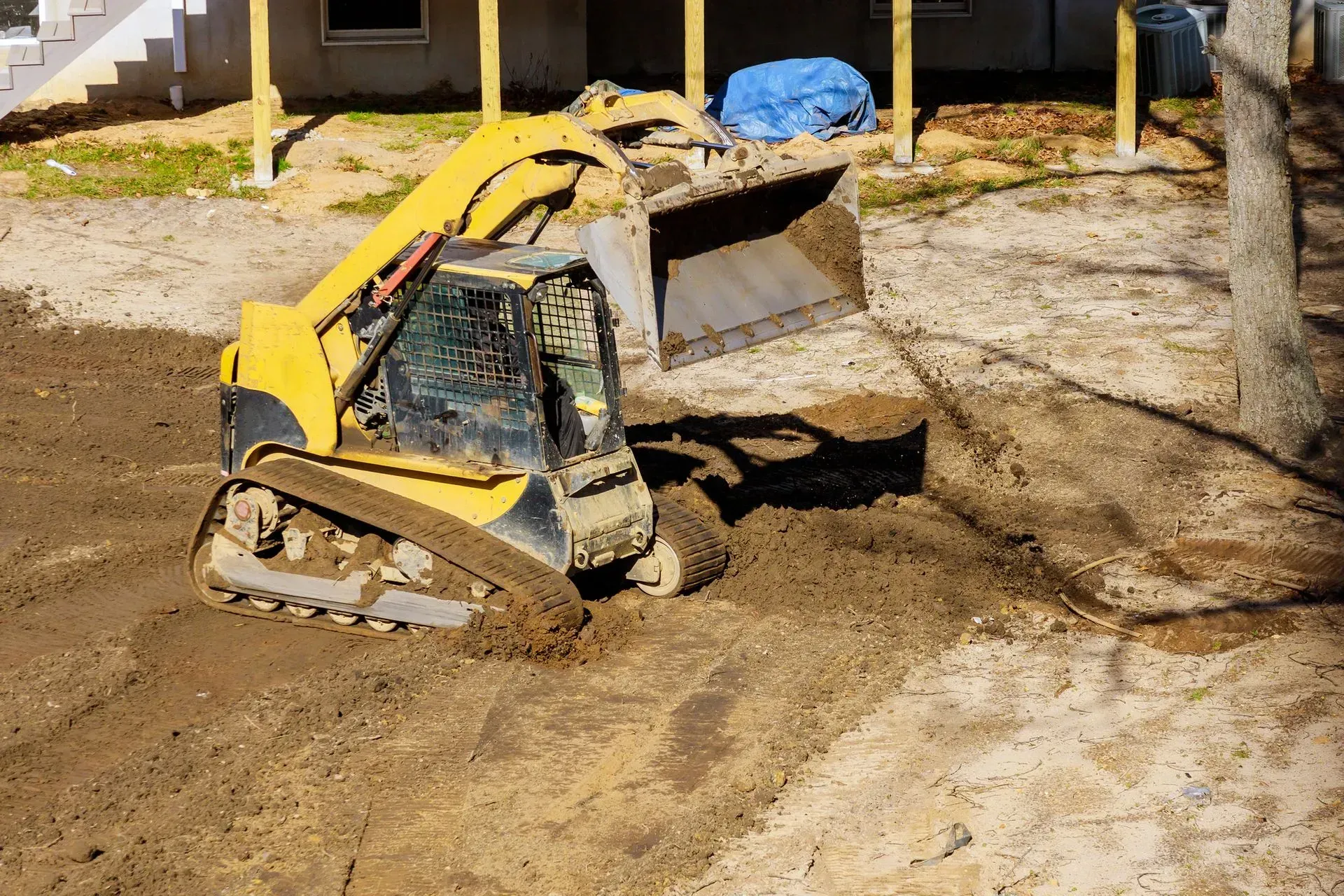
Surfaces Prepared for Drainage and Construction
Grading and Land Leveling in Battleboro for properties needing slope corrections before landscape construction
Professional grading establishes the foundation for drainage performance, landscape installations, and hardscape projects. Rough grading shapes major contours across the property, finish grading creates precise surfaces for patios and walkways, and yard leveling corrects uneven terrain that causes mowing difficulties and standing water. Lyons Landscaping uses professional equipment to achieve accurate grading results that direct water away from foundations and create stable bases for outdoor features throughout Battleboro properties.
Grading work addresses how water moves across your property during storms. Even slight adjustments to surface contours redirect runoff toward drainage features instead of allowing pooling near structures or in low areas where plantings fail. Properties with incorrect grading experience erosion in some areas while other zones remain saturated, creating conditions that damage foundations, hardscapes, and landscape plantings over time.
Schedule a site assessment to identify grading needs specific to your property's drainage patterns.
What Changes After Grading Work Completes
Grading projects use laser levels and grade stakes to establish precise slopes that meet drainage requirements—typically a minimum two percent grade away from structures. Equipment compacts soil in layers rather than simply moving loose material, creating stable surfaces that resist settling under hardscape installations. Areas prepared for patios receive additional compaction and base material to prevent cracking caused by subsurface movement.
Once grading is complete, water flows in predictable directions rather than pooling randomly across the yard. Low spots that held water after rain are eliminated, mowing becomes easier across leveled areas, and surfaces prepared for patios or walkways sit at consistent elevations. Foundation perimeters slope away from the structure, preventing water infiltration that leads to basement moisture or crawlspace problems. These changes are particularly noticeable during the first significant rainfall after grading work finishes.
Grading integrates with other landscape improvements—retaining walls hold grade changes between terraced levels, drainage features collect water directed by surface slopes, and planting beds are positioned where grading provides appropriate moisture conditions. Coordinating these elements during site preparation prevents conflicts that require rework after installations are complete.
Answers to Frequent Grading Questions
Property owners in Battleboro typically ask about grading requirements before starting landscape or hardscape projects, particularly regarding how site work affects existing conditions.
What does rough grading versus finish grading mean?
Rough grading establishes major contours and drainage patterns across the property using heavy equipment, while finish grading creates precise surfaces for specific features like patios, walkways, or planting beds. Both are necessary for properties with significant drainage issues or uneven terrain.
How do you determine the correct slope for drainage?
Grading plans specify minimum slopes of two percent away from structures to ensure positive drainage. Steeper slopes may be necessary depending on soil type, rainfall intensity common to Battleboro, and distances to drainage collection points.
When should grading happen relative to other landscape work?
Grading occurs before landscape installations, hardscape construction, or drainage system installations. Completing grading first prevents damage to finished features and ensures all elements work together as designed.
What happens to topsoil during grading work?
Topsoil is stripped and stockpiled before grading begins, then redistributed after subgrade work completes. This preserves the nutrient-rich layer where plantings will establish rather than burying it under fill material.
How does grading affect existing trees or plantings?
Grading plans account for existing vegetation that will remain, maintaining root zones at original grades. Significant grade changes near established trees often require tree wells or retaining structures to prevent root damage.
Lyons Landscaping evaluates property conditions to determine grading requirements that support drainage performance and provide stable bases for landscape features. Request an evaluation to review site preparation needs before your project begins.